
What is Powerledger?
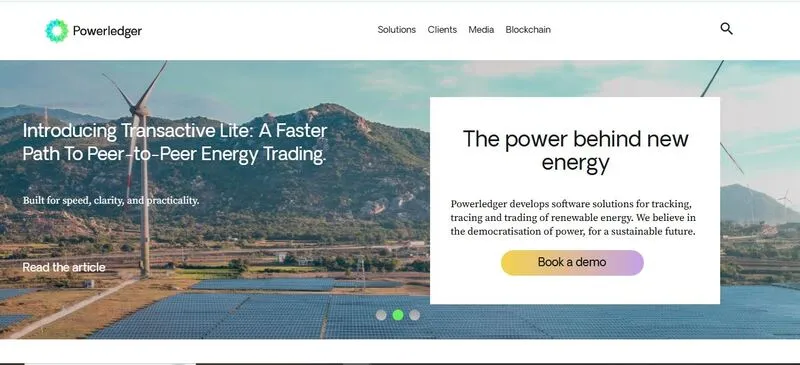
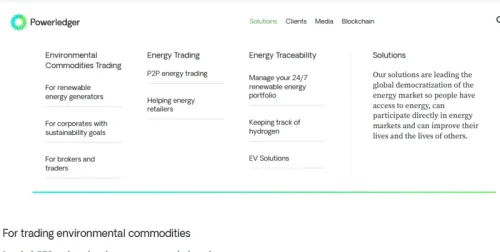
Powerledger sells two layers on one settlement system: Energy Trading, a local market between prosumers and consumers, and Energy Traceability, a record of where each kWh came from. Transactive Lite, launched in March 2026, packages both in a lighter form that runs without new metering hardware. The customer is whoever runs a network with many small generators, such as a utility, energy community, campus or EV charging network, not individual prosumers or installers.
Powerledger comes in after the solar and storage are built. It records who generated each kWh, who used it and how the trade was settled, so sites on one network can sell surplus power to each other. Most deployments sit with utilities, in microgrids, or in pilot programs testing energy trading models. It is not a design or engineering tool and does not control the solar or storage behind the trades.
Pros and Cons
Pros
- Gives prosumers a local buyer for surplus solar, so less of it is exported to the grid
- Trades settle on Solana, so regulators and counterparties can audit them directly
- Transactive Lite is a lighter entry route that needs no new real-time metering
- Proven beyond pilots: Energie Steiermark's energy community in Austria reached 1,000+ participants and about 2,000 MWh traded per year (2021–2025)
- Clean-energy claims come from the same on-chain records as the trades
Cons
- P2P trading between grid customers needs regulatory clearance in most regions, so projects often start as sandbox pilots
- Enterprise deployments need real-time smart meters and utility billing integration, which makes them slow to roll out
- Quote-only, with no trial, so evaluating it means a sales conversation
- Covers trading and traceability only: no PV design, performance monitoring, battery dispatch or REC trading
Features
Energy trading between users
A household or building with surplus solar sells it to another participant on the same network instead of exporting it all to the grid, at a price the seller sets or a tariff the operator fixes. Commercial buildings in BCPG's T77 project in Bangkok have traded rooftop solar this way since 2018.
Blockchain transaction tracking
Every trade is written to the Solana mainnet. The point is auditability: a regulator, a counterparty or an ESG team can check settlement without reconciling spreadsheets.
Renewable tracking tools
Energy Traceability tracks each kWh to its source, recording origin, timestamp and counterparty hourly on-chain. Companies use it to back up claims that their electricity comes from clean sources. Certificate trading is no longer part of the offer: Powerledger has permanently discontinued its REC marketplace, TraceX.
VPP and grid flexibility research
Powerledger does not offer VPP software: it does not aggregate or dispatch solar systems or batteries. The closest related work is a six-month research and development project with Belgian transmission system operator Elia in 2023, which tested how P2P trading can interact with TSO management systems. For dispatch, pair it with a separate VPP or DERMS platform.
Microgrid operation
On campuses and in embedded networks or industrial zones, Powerledger settles trades between buildings that share on-site generation; at Chiang Mai University in Thailand, it tracks energy mix and carbon intensity across three campuses with 12 MW of solar. Storage and switching stay with the site's own controls.
Energy data tracking
The platform records generation, consumption and trades for each participant, and the same records feed settlement and ESG reporting. In Energie Steiermark's smartCOMMUNITY in Austria, customers could also monitor their consumption, generation, savings and trading revenue.
Carbon and sustainability tracking
Carbon accounting is included in Transactive Lite and in some enterprise deployments: meter-level emissions, the carbon-free share of consumption and statements of use. For METLEN in Greece, the platform scores carbon-free energy every 5–15 minutes and tracks PPAs.
Powerledger Pricing
There are no public prices, self-serve signup or free trial: each deployment is quoted on the number of participants, hardware integration, regulatory requirements and scale.
Integrations
The Powerledger platform integrates at the infrastructure level rather than as a simple software add-on:
- Smart meters and energy monitoring hardware
- Utility billing platforms
- Grid and DER management systems
- Solana mainnet for settlement records
Enterprise deployments need coordination with metering hardware vendors and the utility's IT systems. Transactive Lite skips most of that: it takes existing meter data by email, cloud upload or API.
How to Use Powerledger
Identify use case
Decide whether you need a local trading market, a provenance record for clean-energy claims, or both.
Confirm regulatory approval
Check whether local rules allow peer-to-peer trading between grid customers or require a regulatory sandbox. Powerledger's Strategy Lab advises on this groundwork.
Install metering systems
Every participant needs interval meter data. Real-time smart meters are needed only for enterprise deployments.
Connect to existing systems
Link Powerledger to the utility's billing system, so trades appear on customer invoices, and to grid or DER management systems if needed.
Set trading rules
Define who can trade, how prices are set and how often trades settle.
Run pilot project
Start with a small group or limited area to test system behavior.
Scale deployment
Expand gradually after validation and regulatory clearance.
FAQs
Is Powerledger used for solar system design?
No. It is used after installation to manage energy trading and tracking.
Who typically uses Powerledger?
Utilities, energy developers, large commercial operators, governments running pilots, and operators of energy communities, campuses and EV charging networks.
Do end users need blockchain knowledge?
No. The blockchain layer runs in the background. Users interact through standard interfaces.
Is smart metering required?
Meter data is required, but real-time smart meters are not always. Enterprise deployments use real-time smart meter data; Transactive Lite settles daily, weekly or monthly from the meter data you already have.
Can it work with existing grid systems?
Yes. It settles trades and records provenance alongside them; dispatch and network control stay with the grid operator.
Is it useful for small solar installers?
Not usually. It is more common in larger or regulated energy systems.
How long does setup take?
A Transactive Lite pilot can be operational within days of the first data file, according to Powerledger. Enterprise deployments with real-time metering and billing integration take longer, depending on approvals and scale.


