
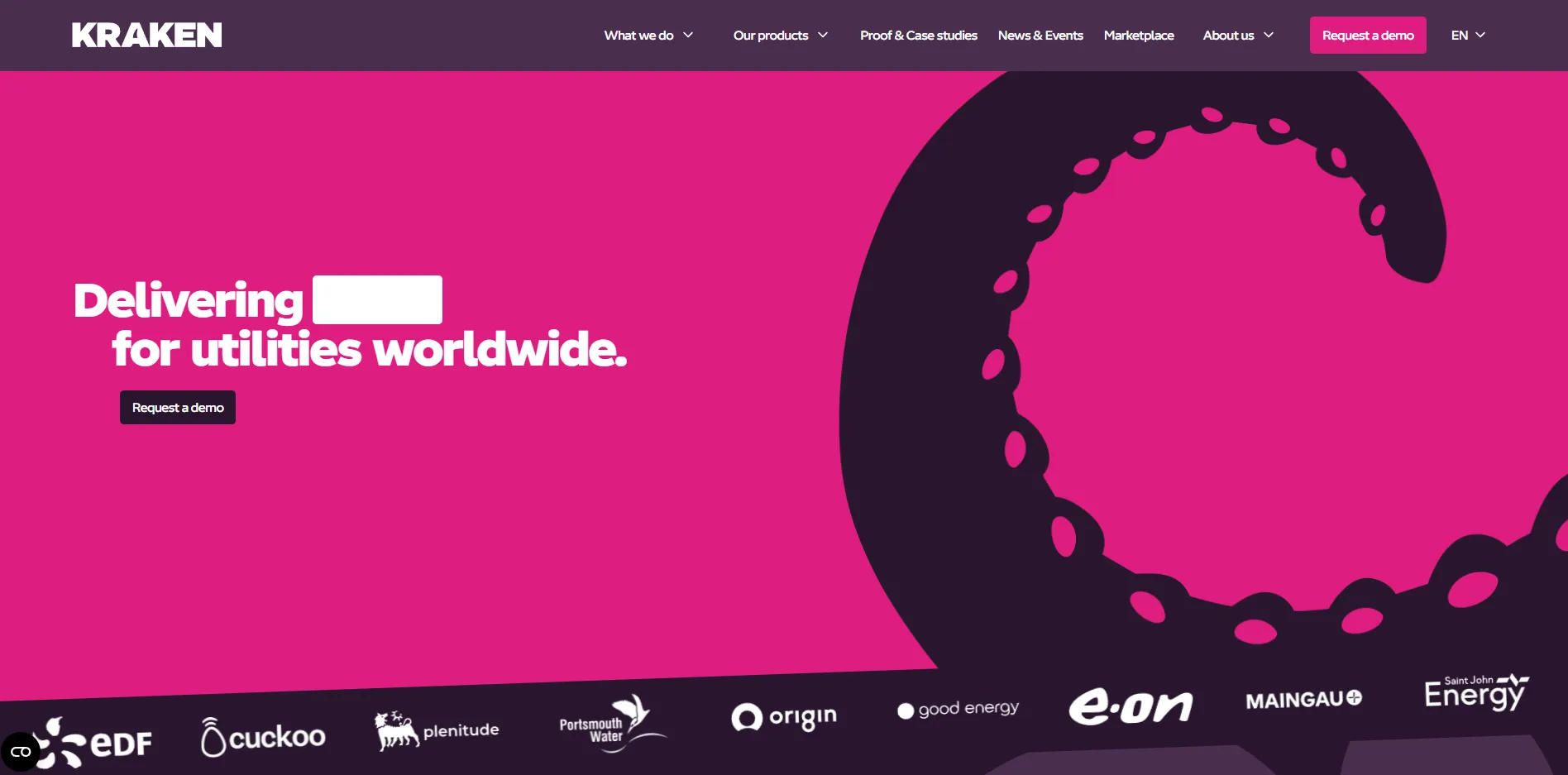
What Is KrakenFlex?
KrakenFlex is a name Kraken has retired: krakenflex.com now redirects to kraken.tech, which sells the platform as Kraken Generation Flexibility (grid-scale batteries and renewables) and Residential Flexibility (home EVs, chargers, heat pumps and batteries). Look for documentation, case studies and sales contacts under those names.
The business started in 2014 as Upside Energy, was bought by Octopus Energy Group in November 2020 and renamed KrakenFlex in 2021. It is now part of Kraken, the energy software company whose spin-out from Octopus was announced in December 2025.
KrakenFlex is Kraken Technologies' software for running flexible energy assets: it bids and dispatches grid-scale batteries and renewables in trading and grid-service markets, and pools home EVs, chargers, heat pumps and batteries into virtual power plants for energy suppliers. It is sold to utilities, energy traders, battery owners and grid operators; homeowners and installers cannot buy it, and households only get it through their supplier's smart tariff.
Technically it is a cloud-native Distributed Energy Resource Management System (DERMS) and Virtual Power Plant (VPP) platform, and a large one: Kraken reports 4 GW of battery storage in operation and 13.5 GW of flexibility contracted. The trade-offs: no published prices, and an enterprise integration project instead of a sign-up.
Pros and Cons
Pros
- Works at fleet scale: Kraken optimizes 550,000+ assets every day.
- AI-driven bidding and dispatch earn trading and flexibility revenue without manual scheduling.
- Handles grid-scale plants and home-device VPPs, so a utility can use one vendor for both.
- Track record with large utilities and traders, including Octopus Energy, E.ON Next, EDF and Vattenfall.
- Moves home EV charging, heating and battery use off peak, lowering supply costs and customer bills.
Cons
- Enterprise deployment: a contracted integration project, not a self-serve sign-up.
- Only controls assets reachable through a supported manufacturer API or on-site hardware.
- No published prices, free tier or trial.
- Not sold to homeowners or small installers; households get it only through their energy supplier.
- Older equipment without a supported API may need custom integration work.
Features
Real-Time Monitoring
Track each asset's availability and performance, with configurable alerts on asset health and warranty conditions.
AI Portfolio Optimization
Optimize energy assets based on market prices, grid conditions, and customer preferences.
Automated Market Dispatch
Bid and dispatch assets automatically in wholesale, frequency response and other ancillary-service markets.
Demand Forecasting
Predict consumer energy demand using machine learning models.
Co-Located Sites
Charge batteries from solar or wind output that would otherwise be curtailed, without triggering extra grid or network fees.
Settlement
Reconcile PPAs and other contracts for the dispatched assets on the same platform.
Grid Flexibility Services
Support utilities with congestion management and demand response.
KrakenFlex Pricing
KrakenFlex uses custom enterprise pricing tailored to infrastructure scale and operational requirements.
Custom Quotes: Pricing is agreed per contract; Kraken publishes no price list.
Enterprise SaaS Model: Fees are set as a subscription or by usage.
Consultation Required: Customers typically complete technical assessments before deployment.
No Free Tier or Trial: The platform is available only under a signed contract.
Integrations
- Hardware Integrations: Supports EVs, EV chargers, thermostats, heat pumps, batteries and inverters through integrations with 60+ manufacturers.
- Connection Methods: Devices connect through manufacturer APIs or on-site hardware.
- APIs and Webhooks: Enable custom integrations and third-party data sharing.
- AWS Cloud Infrastructure: Runs on Amazon Web Services with a serverless architecture.
- Analytics Platforms: Shares platform data with clients through Databricks and works with BI tools such as Grafana, Tableau, Amazon QuickSight or Power BI.
How to Set Up KrakenFlex
- Request a demo and technical consultation from Kraken.
- Assess hardware compatibility and integration requirements.
- Set up sites and the portfolio hierarchy; for grid-scale assets Kraken provides a self-serve onboarding tool.
- Connect physical devices using supported APIs and protocols.
- Set optimization goals, bidding rules, and alert settings.
- Launch automated monitoring and energy market participation.
How to Use KrakenFlex
A typical day starts on the dashboard: asset availability, overnight alerts and market conditions. Bidding and dispatch run automatically, with the optimizer weighing electricity prices, weather forecasts and each asset's operating constraints. Utilities can keep their own trading desk: in Vattenfall's German rollout, Vattenfall trades and carries the market risk, while Kraken executes the positions as dispatch to the batteries and inverters.
During the day, teams track flexibility and VPP performance and pull reports on physical and financial results and on demand response events.
What You Can Manage with KrakenFlex
- Grid-Scale Batteries: Standalone and co-located BESS such as the Zenobe-owned 200 MW/400 MWh Blackhillock site that EDF trades; in March 2025 Kraken said it dispatched half of the UK's grid-scale batteries.
- Residential VPPs: Home EVs, chargers, heat pumps and batteries pooled for an energy supplier; E.ON Next reached 10,000 connected devices in 12 months.
- Renewables and Peakers: Wind and solar plants and gas peakers, optimized in one portfolio with batteries.
- Demand Response Programs: Coordinate customer flexibility during peak demand.
- Grid Stability Services: Support balancing and congestion management.
FAQs
What does KrakenFlex do?
It connects batteries, wind and solar plants and home devices such as EVs and heat pumps to one cloud platform, then forecasts, bids and dispatches them in energy and grid-service markets.
Who is KrakenFlex best for?
Utilities, energy traders, owners and investors of grid-scale batteries and renewables, VPP aggregators and grid operators. It is not for homeowners or small installers, who cannot buy it directly.
Is KrakenFlex free?
No. There is no free tier or trial; Kraken prices each contract individually.
What are the main limitations of KrakenFlex?
Deployment is an enterprise integration project, assets need a supported manufacturer API or on-site hardware, prices are not published, and the KrakenFlex name is retired, so current information sits under Kraken Generation Flexibility and Residential Flexibility.
What are the best alternatives to KrakenFlex?
Alternatives include Schneider Electric EcoStruxure, Uplight (which acquired AutoGrid), and other DERMS and virtual power plant platforms.


